Archives
- 2026-10
- 2026-09
- 2026-08
- 2026-07
- 2026-06
- 2026-05
- 2026-04
- 2026-03
- 2026-02
- 2026-01
- 2025-12
- 2025-11
- 2025-10
- 2025-09
- 2025-03
- 2025-02
- 2025-01
- 2024-12
- 2024-11
- 2024-10
- 2024-09
- 2024-08
- 2024-07
- 2024-06
- 2024-05
- 2024-04
- 2024-03
- 2024-02
- 2024-01
- 2023-12
- 2023-11
- 2023-10
- 2023-09
- 2023-08
- 2023-06
- 2023-05
- 2023-04
- 2023-03
- 2023-02
- 2023-01
- 2022-12
- 2022-11
- 2022-10
- 2022-09
- 2022-08
- 2022-07
- 2022-06
- 2022-05
- 2022-04
- 2022-03
- 2022-02
- 2022-01
Not only does G a GLP complex appear
2022-02-18
Not only does G9a/GLP complex appear to play a role (albeit a seemingly conflicting one) in LTP maintenance, it may also be involved in long-term depression (LTD) (). At hippocampal CA1 synapses, LTD can be induced by pharmacological or synaptic stimulation of Group 1 metabotropic glutamate receptor
A compound structurally similar to
2022-02-18
A 3,4-DAA structurally similar to PF-03654746 has been developed by Pfizer (PF-03654764), with a minor change in the substituent attached to the cyclobutanecarboxamide moiety (Wager et al., 2011). This compound, with the chemical name trans-3-fluoro-3-[3-fluoro-4-(pyrrolidin-1-ylmethyl)phenyl]-N-(2-
While the dogma of the mainstream considers Hippo pathway as
2022-02-18
While the dogma of the mainstream considers Hippo pathway as a series of size-controlling kinases, there were still some controversial data supporting that YAP, a vital oncoprotein of Hippo downstream, is antagonistic to regenerative proliferation [[20], [21], [22]]. Known for its expansion-driving
Glutathione transferases GST have been discovered in many
2022-02-17
Glutathione transferases (GST) have been discovered in many tissues including the cornea of humans and several other mammals (Awasthi et al., 1980, Bilgihan et al., 2003; Gondhowiardjo and van Haeringen, 1993; Saneto et al., 1982, Sastry et al., 1995, Singh et al., 1985, Watkins et al., 1991). To da
In this study we demonstrated that
2022-02-17
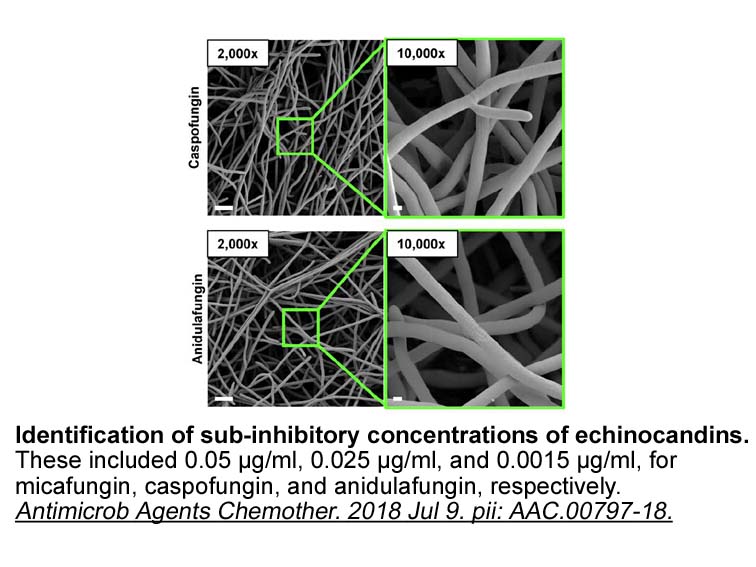
In this study, we demonstrated that while Cu(I) does not affect LPS induced iNOS Epinephrine HCl it inhibits NO release from microglia. Cu(I)-induced GSNOR inhibition and GSNO depletion is more in line with alternative (non-inflammatory) polarization. These results extend our previous findings that
br Manganese based imaging probes br Imaging of
2022-02-17
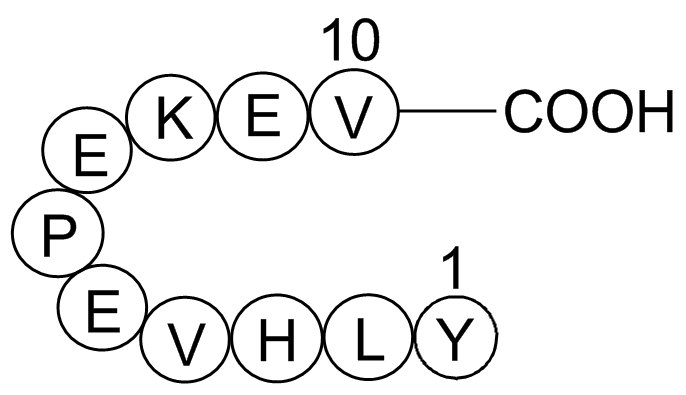
Manganese-based imaging probes Imaging of vesicular monoamine transporter 2 (VMAT2) Imaging of sulfonylurea receptor 1 (SUR1) In mammals, insulin secretion is mediated by the membrane potential of pancreatic β-cells. Increases in glucose levels lead to blocking of ATP-sensitive potassium ch
In recent years several DPP IV inhibitors have already
2022-02-17
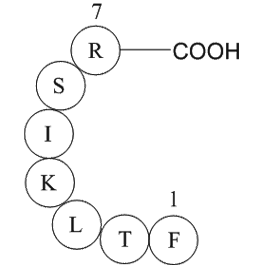
In recent years, several DPP-IV inhibitors have already been approved, such as sitagliptin, vildagliptin, saxagliptin, tenegliptin, alogliptin and linagliptin, etc. Among them, linagliptin (1, Fig. 1) is a non-peptide mimetic nefiracetam with a unique xanthine scaffold developed through high-throug
br Introduction Adipose tissue AT
2022-02-17
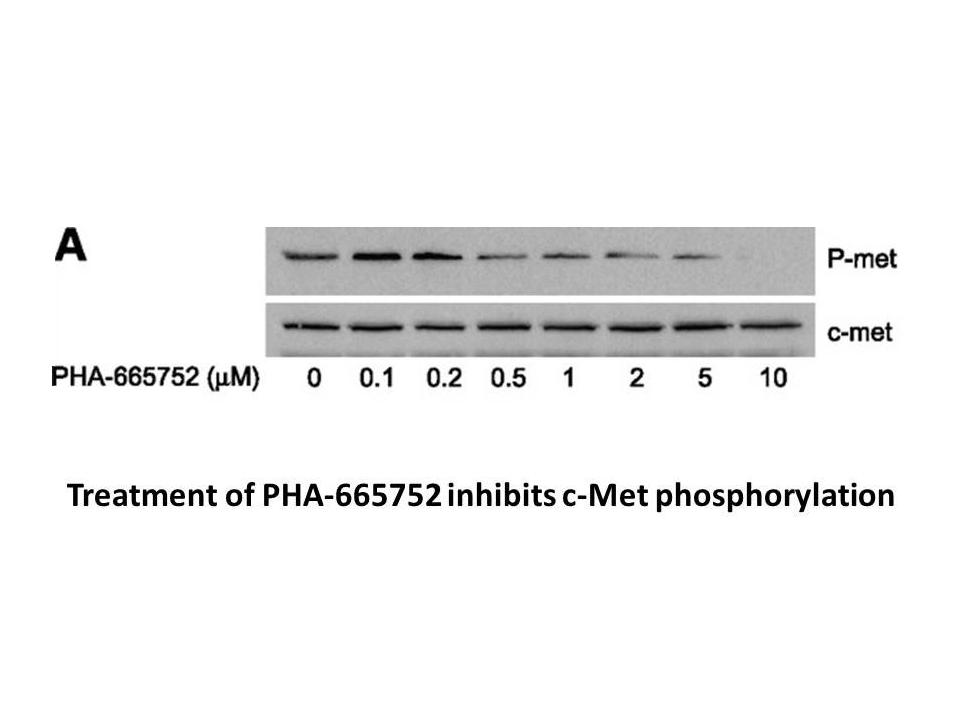
Introduction Adipose tissue (AT), in addition to its function as p2y receptor storage, is an important endocrine organ and it secretes adipokines (Ahima, 2006). Adipose tissue is related to different physiological processes such as energy metabolism, insulin sensitivity, and inflammation. One imp
Polyunsaturated fatty acids PUFAs represent
2022-02-17
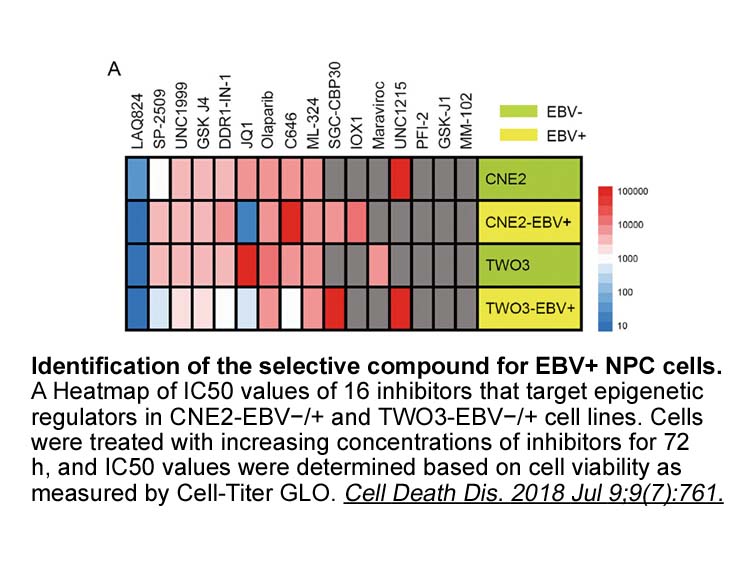
Polyunsaturated fatty acids (PUFAs) represent a class of lipids that contain two or more carbon double (unsaturated) bonds (CC) and classified as n-3, n-6 and n-9 fatty acids. PUFAs including n-3 such as docosahexaenoic jasplakinolide (DHA), eicosapentaenoic acid (EPA) and n-6 such as arachidonic a
br Redox regulation in the brain Reactive oxygen
2022-02-17

Redox regulation in the brain Reactive oxygen species are generated in SB 239063 by the mitochondrial respiratory chain, which occurs on the inner mitochondrial membrane (Murphy, 2009, Jensen, 1966, Dickinson and Chang, 2011). Interestingly, although most cancer cells are thought to primarily re
Recent studies revealed that synthetic
2022-02-17
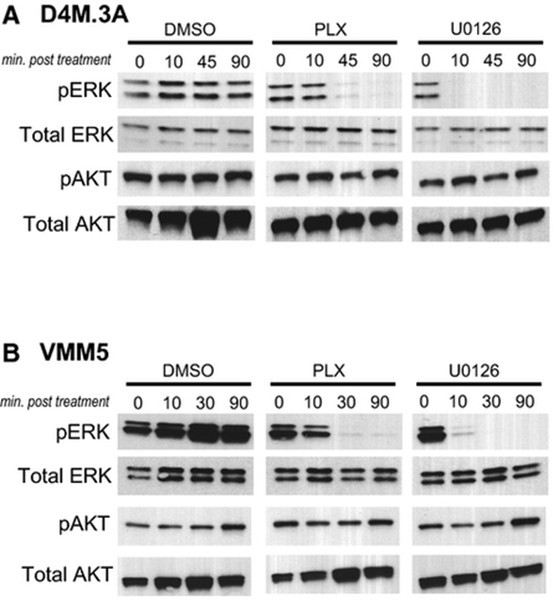
Recent studies revealed that synthetic oligomeric Aβ1-42 decreased GLT-1 expression and promoted mislocalization of GLT-1 from the cell surface of primary astrocytes, leading to glutamate dyshomeostasis in synapses (Abdul et al., 2009, Scimemi et al., 2013). To address the cause for reduction of as
br Treatment KD is currently the treatment of choice
2022-02-17
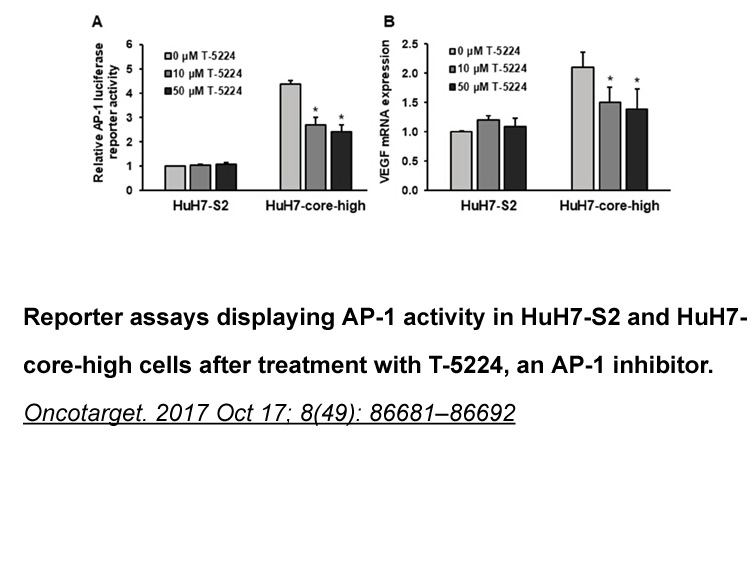
Treatment KD is currently the treatment of choice for GLUT1-DS. It is a high-fat, carbohydrate-restricted diet that mimics the metabolic state of fasting; so, the KD relies an exogenous rather than body fat for ketone production, thus maintaining ketosis without weight loss. As the developing br
The Hedgehog Hh pathway is
2022-02-17
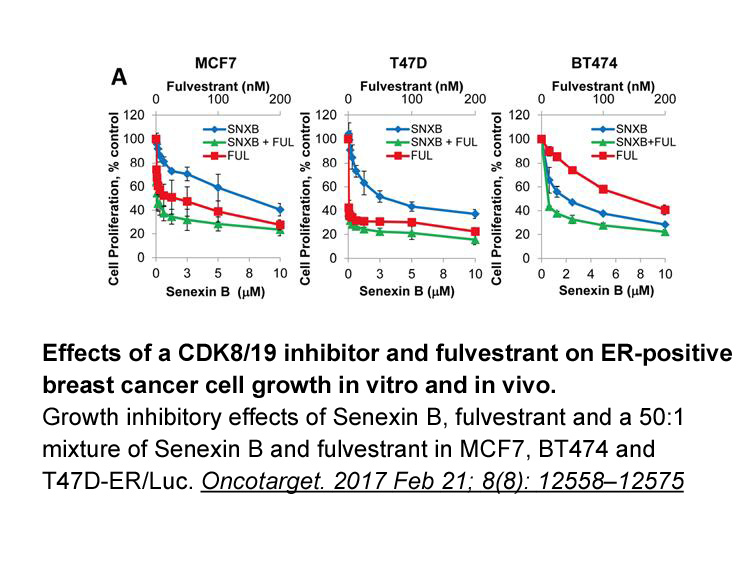
The Hedgehog (Hh) pathway is linked to the development of several types of epithelial cancers (Rubin and de Sauvage, 2006). A paracrine mechanism has been implicated in CAF activation, with Hh ligands secreted by cancer cells activating the glioma-associated transcription factors (Gli) in surroundin
Conversely we find that dysfunction
2022-02-17
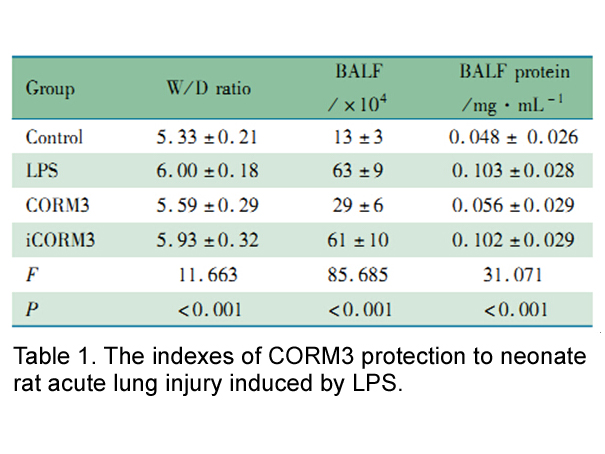
Conversely, we find that dysfunction in lysosomal-autophagy system observed in human APP and PSEN1 mutant neurons can be reversed by β-secretase inhibition, which reduces the supply of APP-β-CTF to the late endosome and/or lysosome (Jiang et al., 2010). These data argue that accumulation and/or alte
Considering the conformational preferences of the SRSRY sequ
2022-02-16
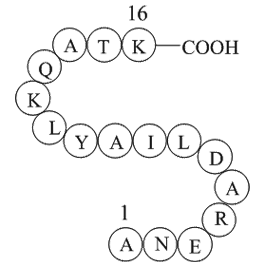
Considering the conformational preferences of the SRSRY sequence in the x-ray structures of soluble uPAR (SuPAR) [18], [19], [20], [50], [51], it is included in a quite flexible linker delimited by Cys76 and Cys95 residues. The SRSRY sequence adopts either α-turned or β-extended conformation. In any
8135 records 513/543 page Previous Next First page 上5页 511512513514515 下5页 Last page